
Sex Offender Checks in Montgomery County
The official starting point is the Iowa Sex Offender Registry, maintained by the Iowa Department of Public Safety and its Division of Criminal Investigation. A visitor may search statewide or narrow the results to Montgomery County. The portal says its data normally updates each hour on business weekdays, but it also warns that accuracy, timing, and map placement are not guaranteed. A live count should be read with its date because the number changes.
The registry is one layer. The Montgomery County Sheriff's Office registers and verifies people whose principal residence is in the county. For a named registrant, Iowa law permits a separate no-fee request to the sheriff by phone, in writing, or in person when the requester gives the name and at least one qualifying identifier. That response may add school, employer, temporary lodging, and vehicle data that does not appear in the open web profile.
Montgomery County Registry Agreement
First-time visitors are directed to an agreement before they search. It sets the ground rules: use the information for awareness, account for possible delay or error, and do not scrape the site outside the official API or RSS methods. The agreement also warns against threats, vandalism, assault, and acts aimed at registrants, their families, or other connected people.
The official Iowa registry screen shows how the public search begins.
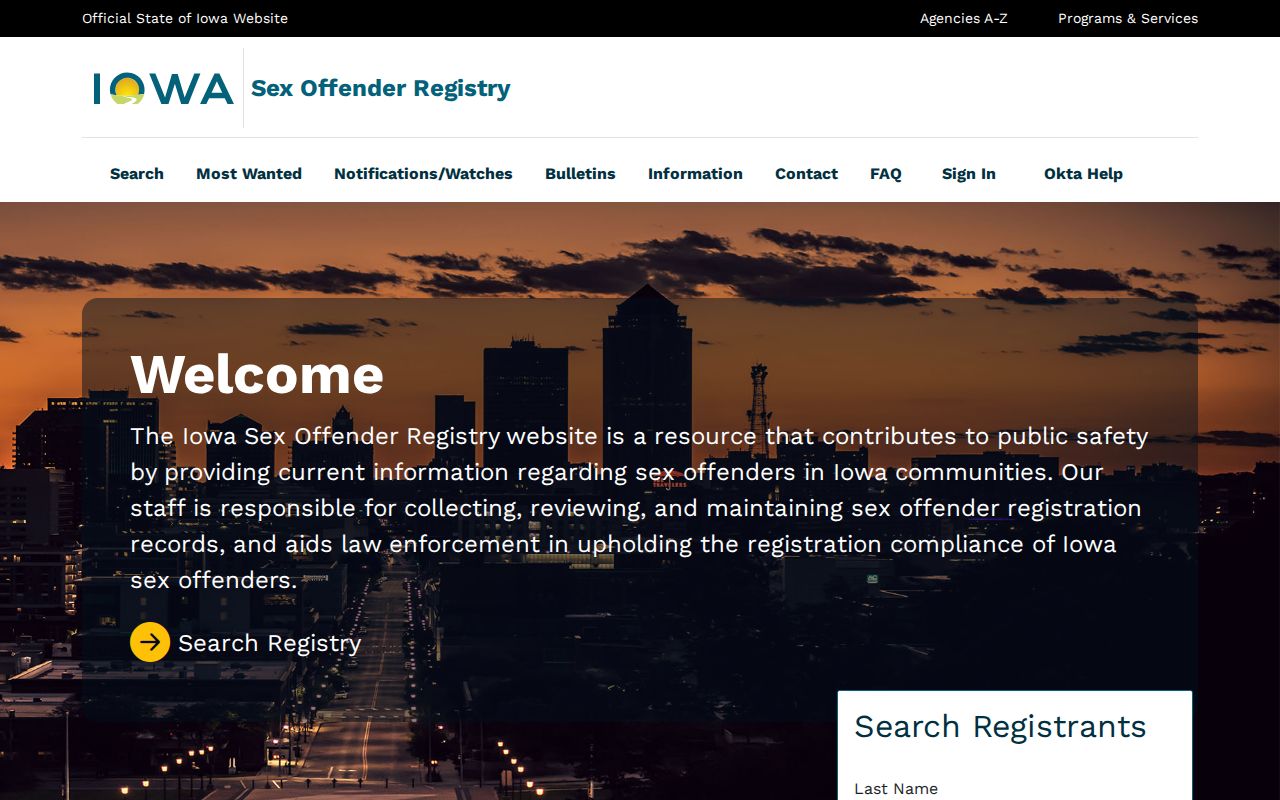
That agreement is part of the search, not a claim that every listed fact is current or that every Iowa registrant appears online.
How to Search the Iowa Sex Offender Registry
Choose the search mode that matches the question. A name works best for a known person. County, city, ZIP, address, and map tools are more useful for Montgomery County community awareness. Telephone and email modes check registered identifiers. Advanced controls can narrow by sex, age, size, or registry number, but broad filters can produce many records that still need careful comparison.
- Open the official registry and accept its conditions of use.
- Choose Basic, Advanced, Map, Telephone, or Email search.
- Enter a name or Montgomery County location details, then submit the search.
- Open the matching profile and check identifiers, address, offense, tier, and last-changed date.
| Field or mode | Type | Required | Use |
|---|---|---|---|
| First and last name | Text | No stated minimum | Basic name search; aliases may be included. |
| County | Dropdown | Optional | Select Montgomery to narrow the area. |
| City or ZIP | Text | Optional | May include a surrounding-area option. |
| Address or coordinates | Location | Range required | Runs a distance-based map search. |
| Telephone or email | Search mode | Identifier needed | Checks whether an identifier is registered. |
| OCI/ISOR number | Text | Optional | Targets a registry identifier. |
The registry's official API information documents the geographic filters, paging, sorting, and starts-with behavior.
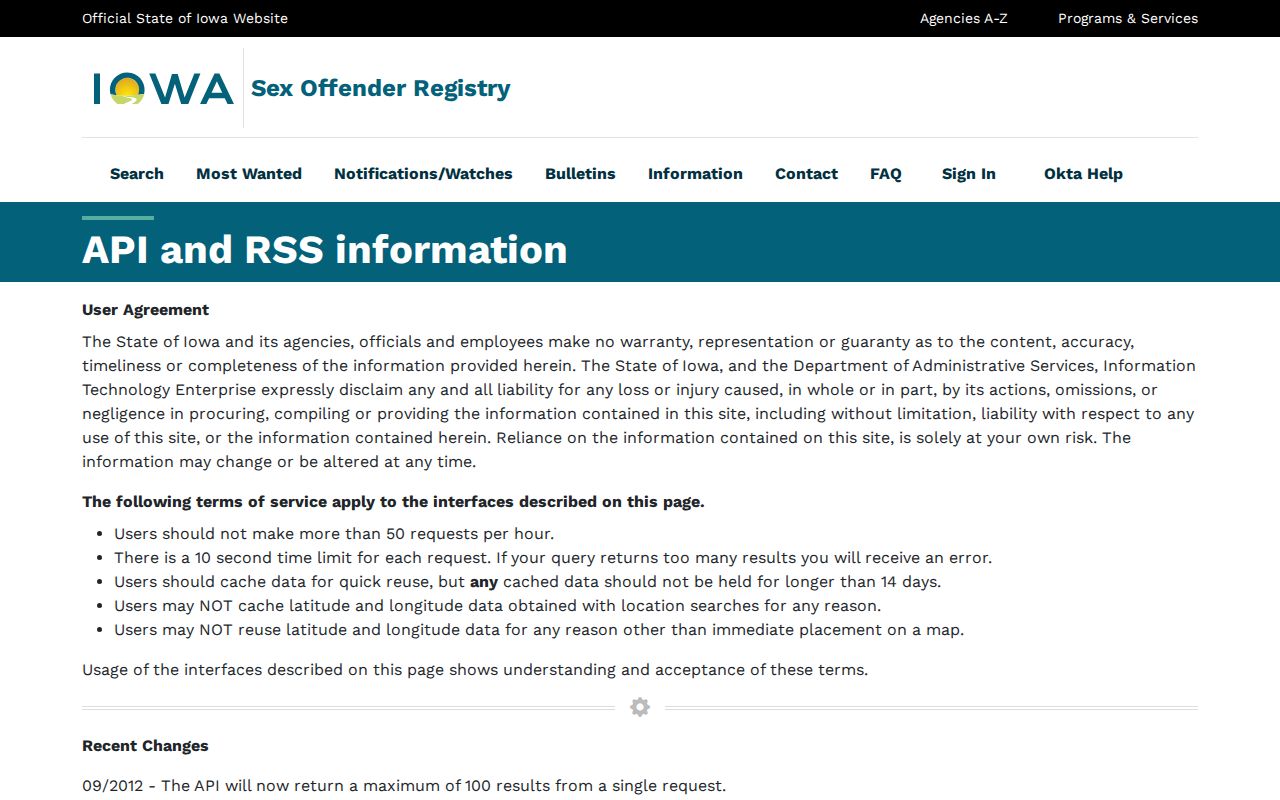
Those field definitions help explain why one careful narrow search can be more useful than a large statewide result list.
Montgomery County Offender Registration
Registration and in-person verification occur through the Montgomery County Sheriff's Office at the Law Enforcement Center, 106 W. Coolbaugh Street in Red Oak. The posted administrative line is 712-623-5107, with weekday hours of 7:00 a.m. to 4:00 p.m. Confirm whether an appointment is needed. The sheriff takes a photo and updates it at least yearly, while the statutory check-in rate depends on tier.
Iowa Code section 692A.121(5) also gives a public route for details on a specific person. Supply the person's name and at least one identifier such as date of birth, address, telephone number, internet identifier, or Social Security number. The sheriff may provide the additional public data by phone, writing, or in person without a fee. The same office must provide a countywide list upon request.
Note: The posted weekday window describes office access, so confirm the proper registration or records contact before making a trip.
Inside a Registry Profile
A public profile connects identity, appearance, residence, conviction, and registry status. Compare more than a name. The legal name, aliases, photo, date of birth, and physical traits help guard against a mistaken match. The address and map point show reported residence, while the last-changed date gives context about how fresh that entry may be.
| Identity | Legal name, aliases, date of birth, sex or gender, race, and OCI identifier. |
|---|---|
| Appearance | Photo, hair and eye color, height, weight, scars, marks, and tattoos. |
| Residence | Street, city, ZIP, county, coordinates, proximity distance, and address-cluster count. |
| Conviction | Qualifying offense, statute text, age at offense, and limited victim category. |
| Status | Tier, most-wanted flag when applicable, and the profile's last-changed date. |
| Not shown online | Victim identity, fingerprints, DNA, government-ID numbers, and protected school or employer details. |
The current Iowa registry law identifies the information available to the public.
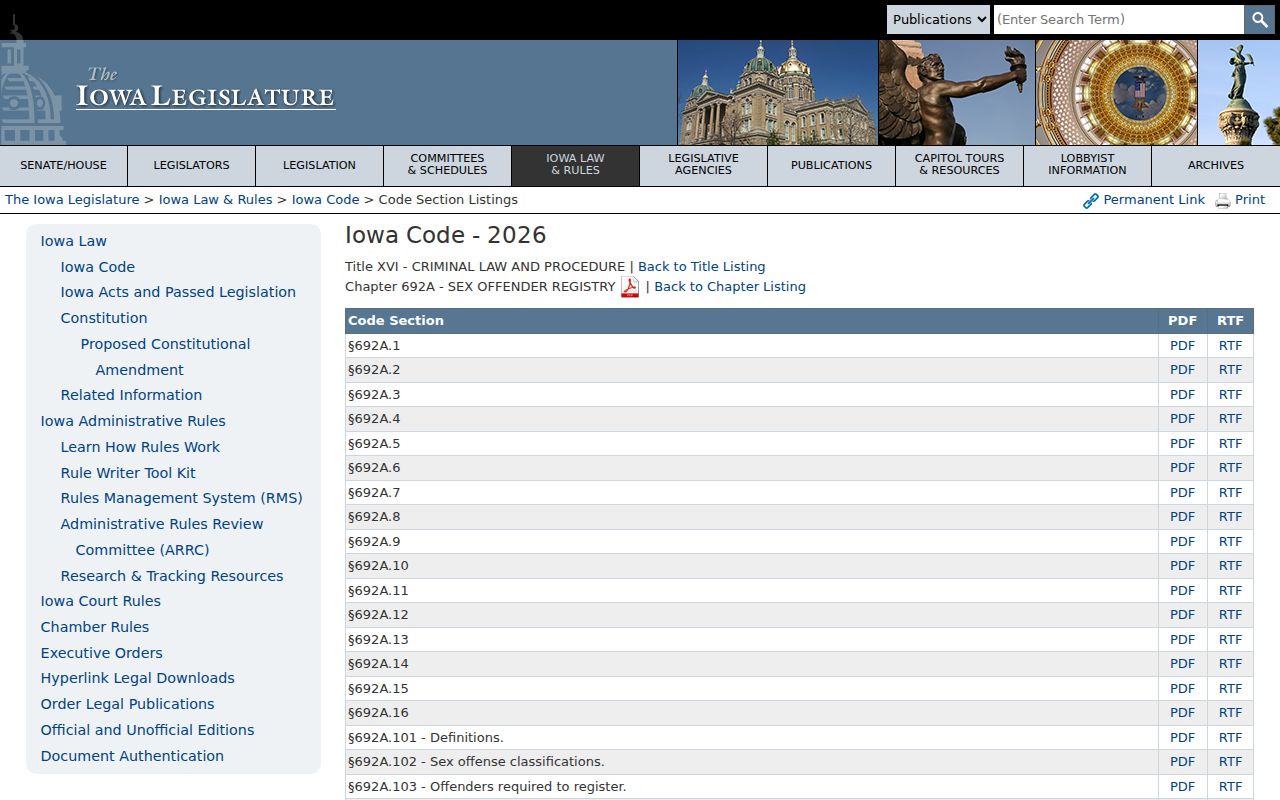
The law also draws the line between fields released online and additional specific-offender information requested from the sheriff.
Montgomery County Profiles Leave Some Data Offline
The web profile is not a full police or court case file. It excludes protected names, victim identities, nonconviction arrests, passport and immigration documents, government identification numbers, DNA, fingerprints, palmprints, licensing facts, and Social Security numbers. School and workplace identity or address are also not put on the open site.
This split matters when a search is for community safety rather than curiosity. The online view supplies the fields Iowa has chosen for broad disclosure. The sheriff's specific-person process supplies some added facts only after the requester provides a name and an identifier. Neither route replaces the official criminal case file, and neither should be read as a complete account of every event in the person's history.
Iowa Registration Levels and Requirements
Iowa uses Tiers I, II, and III, but tier alone does not create a simple ten-year, twenty-five-year, and lifetime schedule. Section 692A.106 sets a ten-year default and then adds longer rules for special sentences, repeat or aggravated convictions, prior qualifying convictions, registry violations, and sexually violent predator status. An out-of-state registrant follows the longer applicable term.
| Tier | In-person verification | Duration framework |
|---|---|---|
| Tier I | Each year | Ten-year default unless an exception applies. |
| Tier II | Every six months | Ten-year default unless an exception applies; not a fixed 25 years. |
| Tier III | Every three months | Ten-year default, with many qualifying facts producing life. |
A repeat Tier I becomes Tier II, and a repeat Tier II becomes Tier III. Sexually violent predators are Tier III. A Tier II offense against a child under thirteen is classified as Tier III. District court modification under section 692A.128 is possible only when statutory conditions are met; it is never automatic.
Montgomery County Registry Distance Rule
The two-thousand-foot residence limit in section 692A.114 is not a blanket rule for every registrant. It applies to a person convicted of a defined aggravated offense against a minor and contains statutory exceptions. The restriction concerns residence near a school or child-care facility. A map result alone does not prove that the rule applies or that a residence violates it.
A careful Montgomery County sex offender search therefore separates three questions: where the profile reports a residence, which qualifying offense or status applies, and whether a listed exception changes the legal result. The sheriff or legal counsel, not a public viewer's map estimate, can address a disputed compliance issue. For possible noncompliance, use the registry's Most Wanted route, Iowa DPS, or the Montgomery County sheriff.
Set a Montgomery County Registry Watch
A free Okta account unlocks My Watches and My Account. A Montgomery County watch can cover an address and radius, city, county, ZIP, a named registrant, or a group. The portal says it sends notice within sixty minutes after registered information changes. That is a change alert, not a guarantee that every fact was instantly verified by the public system.
Iowa does not require a separate notice to each neighbor. Section 692A.121 permits notice through print, media, websites, and community meetings. It also directs the sheriff to notify the school district administrative office and nearby nonpublic schools when the statutory conditions apply. Watches let a resident choose a useful area without repeatedly running the same search.
Montgomery County and National Registry Searches
The Iowa portal is the best source for Iowa fields, Iowa rules, and a Montgomery County filter. When a search crosses state lines, use the U.S. Department of Justice's National Sex Offender Public Website. NSOPW searches participating jurisdictions from one official federal interface, while the state profile remains the better place to read Iowa-specific details and local change dates.
The national search interface provides the official cross-state layer.
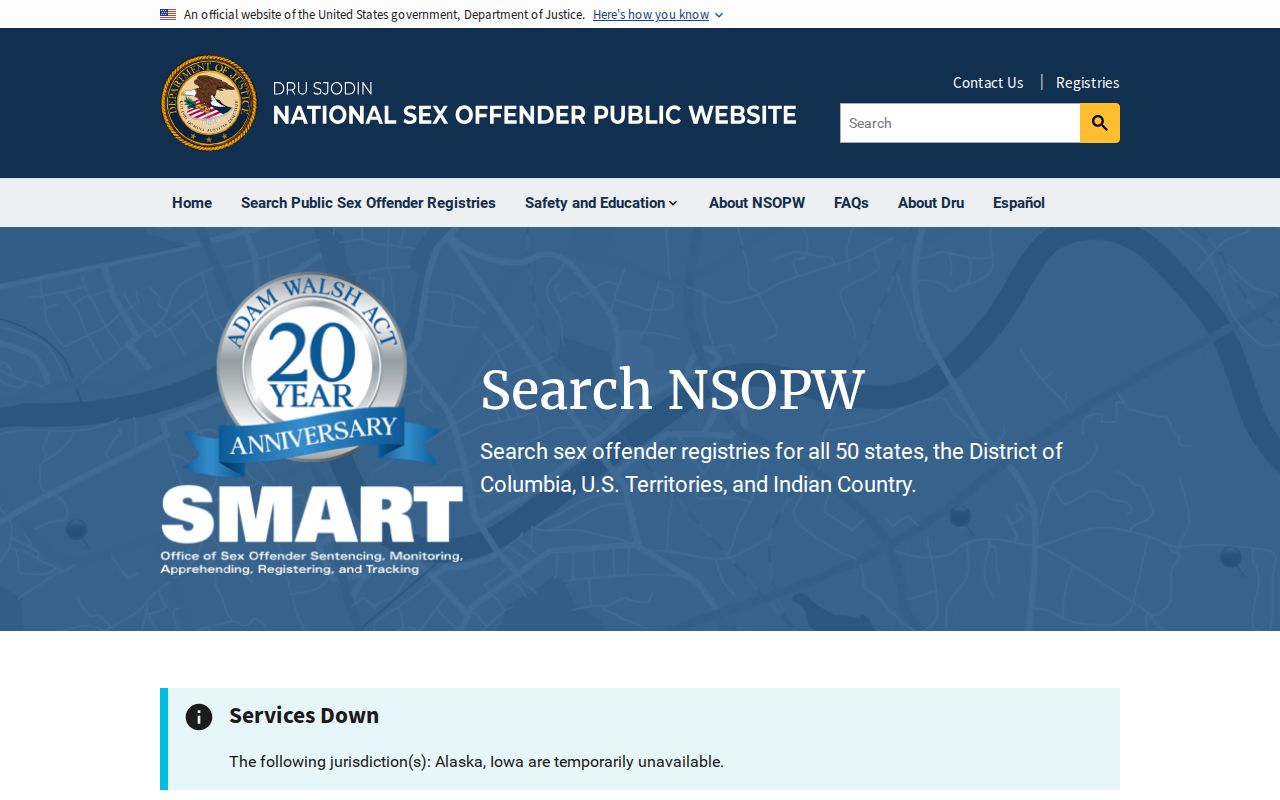
A national no-hit still calls for careful spelling, alias checks, and a direct state search when the concern is tied to Montgomery County.
Montgomery County Registry Duties and Deferred Judgments
A deferred judgment and a registry modification are distinct legal paths. Iowa Code section 907.9 addresses expungement after discharge from an eligible deferred judgment. Registry modification falls under section 692A.128 and has its own conditions, including minimum time periods, treatment, a low-risk assessment, and other statutory findings. Finishing one process does not support a broad promise about the other.
The official deferred-judgment provisions show why the two records questions must be kept separate.
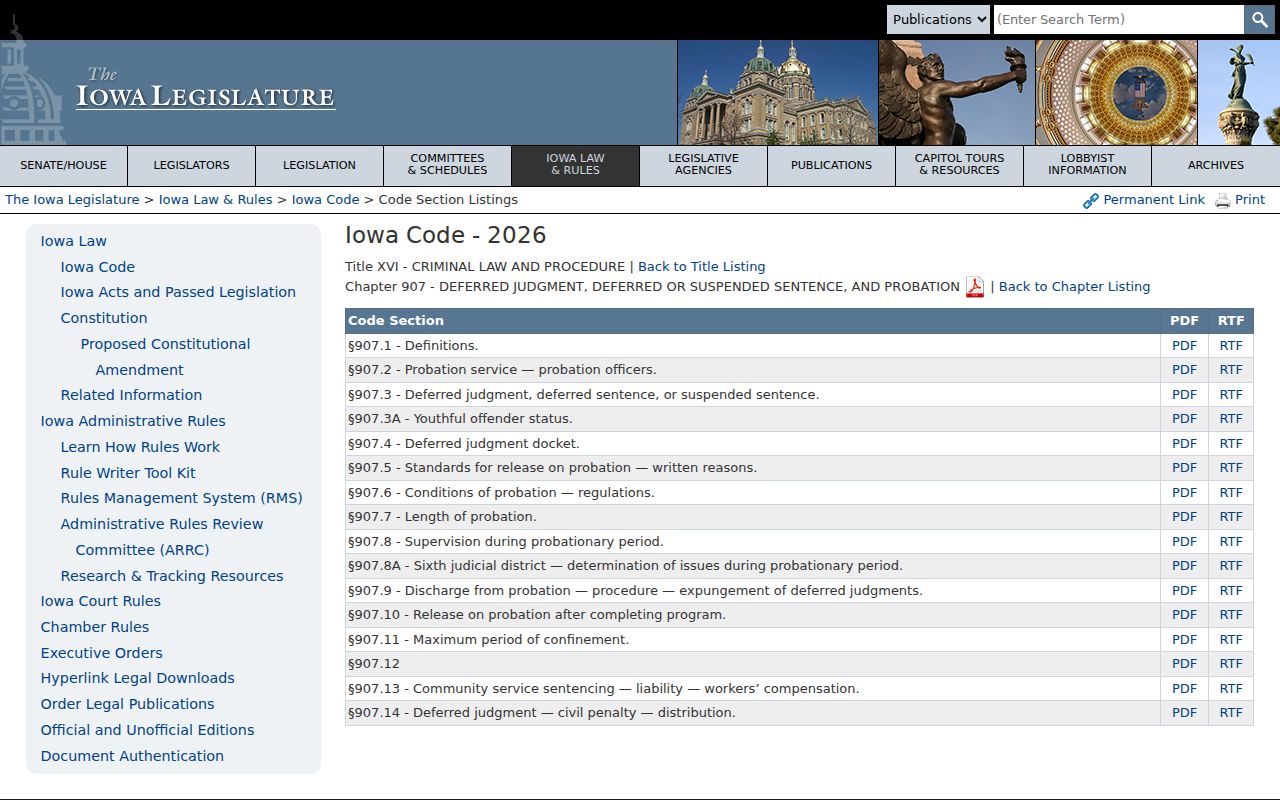
Anyone seeking a change to registration duties should rely on the specific registry statute and court process, not infer relief from a general record-clearing label.
Community Notification and Lawful Use
Registry information supports personal, family, school, and community safety decisions. It does not authorize confrontation or punishment. If the Most Wanted page or another profile raises a concern about noncompliance, report it to Iowa DPS or the Montgomery County Sheriff's Office. Call emergency services for an imminent threat. Never try to detain or approach the person.
Use registry information lawfully: The Iowa registry agreement warns that threats, assault, vandalism, harassment, or other acts may lead to prosecution under the Iowa law governing that conduct. Iowa Code chapter 692A does not create a generic registry-misuse offense.
Public data can be incomplete or delayed. Confirm a specific concern with the registry or sheriff, and do not treat a map marker as proof of present location. The public purpose is awareness and safe reporting.